
Probability Theory in Casino Games: A Rational UK Player’s Guide
For the UK player looking past the glitz, every spin, deal, and roll is governed by the unflinching laws of probability. Beneath the surface of vibrant online slots and the buzz of the live casino floor lies a world of mathematical certainty. This guide cuts through the superstition and sales talk to equip you with the rational thinking and probability theory essential for understanding casino games. By viewing gambling through the lens of maths rather than myth, you transform your experience from one of hopeful chance to one of informed, controlled entertainment.
The Unshakeable Foundation: Understanding Randomness
At the core of all modern casino games, online and offline, is the principle of true randomness. Whether it’s the digital spin of a slot from providers like Playtech or Microgaming, or the physical tumble of a lottery ball, each outcome is independent. This is a crucial concept: past events do not influence future ones. The machine has no memory, and the wheel has no conscience. This foundation is what makes probability theory applicable and shatters the most pervasive gambling myths.
The Myth of ‘Due’ Wins and Streaks
The belief that a win is “due” after a losing streak, or that a machine is “hot,” is a classic error known as the gambler’s fallacy. Probability doesn’t seek balance in the short term. If you flip a fair coin and get heads ten times in a row, the probability of tails on the eleventh flip is still exactly 50%. In European roulette, if black comes up five times consecutively, the odds of red on the next spin remain 18/37. Recognising the independence of each event is the first step in rational play.
How Regulators Like the UKGC Ensure Fair Randomness
For British players, fairness isn’t taken on trust; it’s enforced. The UK Gambling Commission (UKGC) mandates that all licensed operators use certified Random Number Generators (RNGs) for their digital games. These RNGs are rigorously tested by independent auditors to ensure they produce truly random and unpredictable results. This regulation means that when you play at a UKGC-licensed site, you can be confident the game’s core mechanics are fair, even if the odds are mathematically in the house’s favour.
The House Edge Decoded: Your Expected Cost of Play
The house edge is the built-in mathematical advantage that ensures a casino turns a profit over time. It’s expressed as a percentage of each bet that, on average, the casino expects to keep. Think of it as the cost of playing the game. For example, in single-zero European roulette, the house edge is 2.7%. This means that for every £100 wagered, you can mathematically expect to lose £2.70 in the long run. It’s not a guarantee on every session, but the inescapable trend over thousands of bets.
How the Edge Varies: Slots vs. Blackjack
The house edge is not uniform. Different games offer vastly different odds. A typical online slot might have a house edge (shown as RTP or Return to Player) of 3-10%, meaning it keeps 3-10p from every £1 over time. In contrast, a well-played game of blackjack using perfect basic strategy can reduce the house edge to as low as 0.5%. This variation is key to making rational choices about where to place your money.
Why Even ‘Low Edge’ Games Favour the Casino
It’s vital to understand that a low house edge does not mean the game is in your favour; it simply means the rate of loss is slower. That 0.5% edge in blackjack still means the casino has the advantage. Over a long enough period, the mathematical expectation will always assert itself. This is why professional gamblers focus on games with an element of skill where they can gain an actual edge, like poker or sports betting, not on pure chance casino games.
Game-by-Game Probability: From Roulette to Blackjack
Let’s apply probability theory directly to the games you’ll find at major UK operators like William Hill and Ladbrokes, breaking down the stark realities behind the entertainment.
Roulette: The Clear-Cut Maths of the Wheel
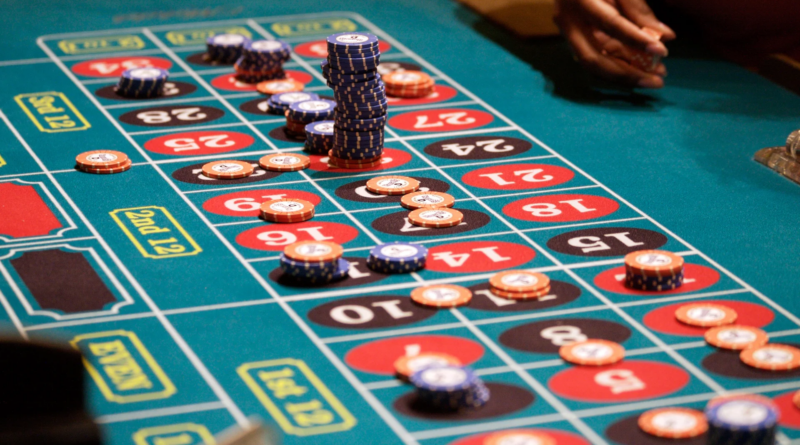
European roulette, standard in UK casinos, offers one of the simplest probability lessons. The wheel has 37 pockets (numbers 1-36 and a single zero). The probability of your straight-up bet on one number winning is exactly 1 in 37. The payout is 35 to 1. The discrepancy between the true odds (36 to 1) and the payout is where the house derives its 2.7% edge. Every bet on the layout can be calculated back to this fundamental imbalance.
Blackjack: Where Strategy Shifts the Odds
Blackjack is unique because the probability shifts with every card dealt. While the baseline chance of winning any given hand is around 42.22%, your decisions dramatically impact the long-term edge. Using a mathematically perfect basic strategy—knowing when to hit, stand, double, or split based on your hand and the dealer’s upcard—reduces the house edge to its minimum. Deviating based on “gut feeling” increases it, often substantially.
Slots: RTP, Volatility, and the Long Run
Slots operate on a different principle. Their outcome is determined by a complex RNG tied to a theoretical RTP. A 96% RTP slot is expected to return £96 for every £100 wagered over millions of spins—a 4% house edge. However, volatility is key. A high-volatility slot may have long dry spells followed by large payouts, while a low-volatility one offers smaller, more frequent wins. Crucially, in any single session, the RTP is virtually meaningless; it’s a long-term statistical average, not a promise.
Debunking Common Gambling Superstitions in the UK
Applying sceptical thinking to gambling exposes the comforting but flawed rituals and beliefs many players hold. From the pub fruit machine to the online live casino, superstition is a poor substitute for statistics.
Lucky Charms and Rituals
Blowing on dice, wearing a “lucky” shirt, or tapping the screen before a spin are harmless personal rituals, but they are powerless against an RNG or a shuffled deck. The belief that a physical action can influence a random outcome is a form of magical thinking. The machine doesn’t know you’re wearing your “winning” hat. Similarly, believing certain online casino ‘brands’ are ‘cold’ or ‘hot’ misattributes normal random fluctuation to a phantom pattern.
Misreading Patterns and ‘Casino Tells’
Our brains are wired to find patterns, even in noise. Seeing a sequence like 26, 5, 32 on a roulette table and betting on 18 because it “feels” like the pattern’s midpoint is a profound misunderstanding of randomness. Likewise, the idea that a live dealer has a “tell” or that a slot is “primed” to pay out after a big win are dangerous fantasies. Each event is isolated. The National Lottery’s Lotto draw, with odds of approximately 1 in 45 million for winning the jackpot, is the ultimate example: no set of “lucky” numbers has a higher probability than any other.
Applying Rational Thinking: A UK Player’s Action Plan
Knowledge of probability isn’t a tool to beat the casino at its own game; it’s a tool for smarter, more sustainable play. Here’s how a rational UK player applies this understanding.
Choosing Games with the Best Odds
Your first rational decision is game selection. Based on house edge alone, a logical preference ladder for common games would be:
- Blackjack (with perfect basic strategy): House edge as low as 0.5%.
- Baccarat (Banker bet): House edge around 1.06%.
- European Roulette: House edge 2.7%.
- Standard Slots: House edge typically 3-10%+.
This doesn’t mean you should never play slots, but you should go in aware that the entertainment cost per pound is likely higher.
Bankroll Management: The Most Rational Habit
This is the non-negotiable habit for the rational player. Since probability dictates you will lose over time, you must control the rate and impact of that loss.
- Set a Loss Limit: Decide the maximum you are willing to lose in a session and stick to it. This is the price of your entertainment.
- Set a Win Goal: Decide a realistic profit target at which you will stop playing and bank your winnings.
- Use a Budget: Only gamble with money you can afford to lose, completely separate from essential finances.
View your gambling budget like a leisure budget for cinema or dining out—money spent for enjoyment, not an investment.
True empowerment for the UK player comes from replacing superstition with statistical understanding. By internalising the principles of randomness, the house edge, and game-specific odds, you strip away the illusion of control and see gambling for what it is: a form of paid entertainment with known, mathematically-defined costs. This perspective transforms play from hopeful guesswork into an informed, conscious choice, allowing you to enjoy the thrill while firmly managing the risk.